Our story
So no one has to face hard times alone. FavourBee turns neighbours into a trusted tribe — giving and getting real help, no money needed — so that when life turns, someone's there.
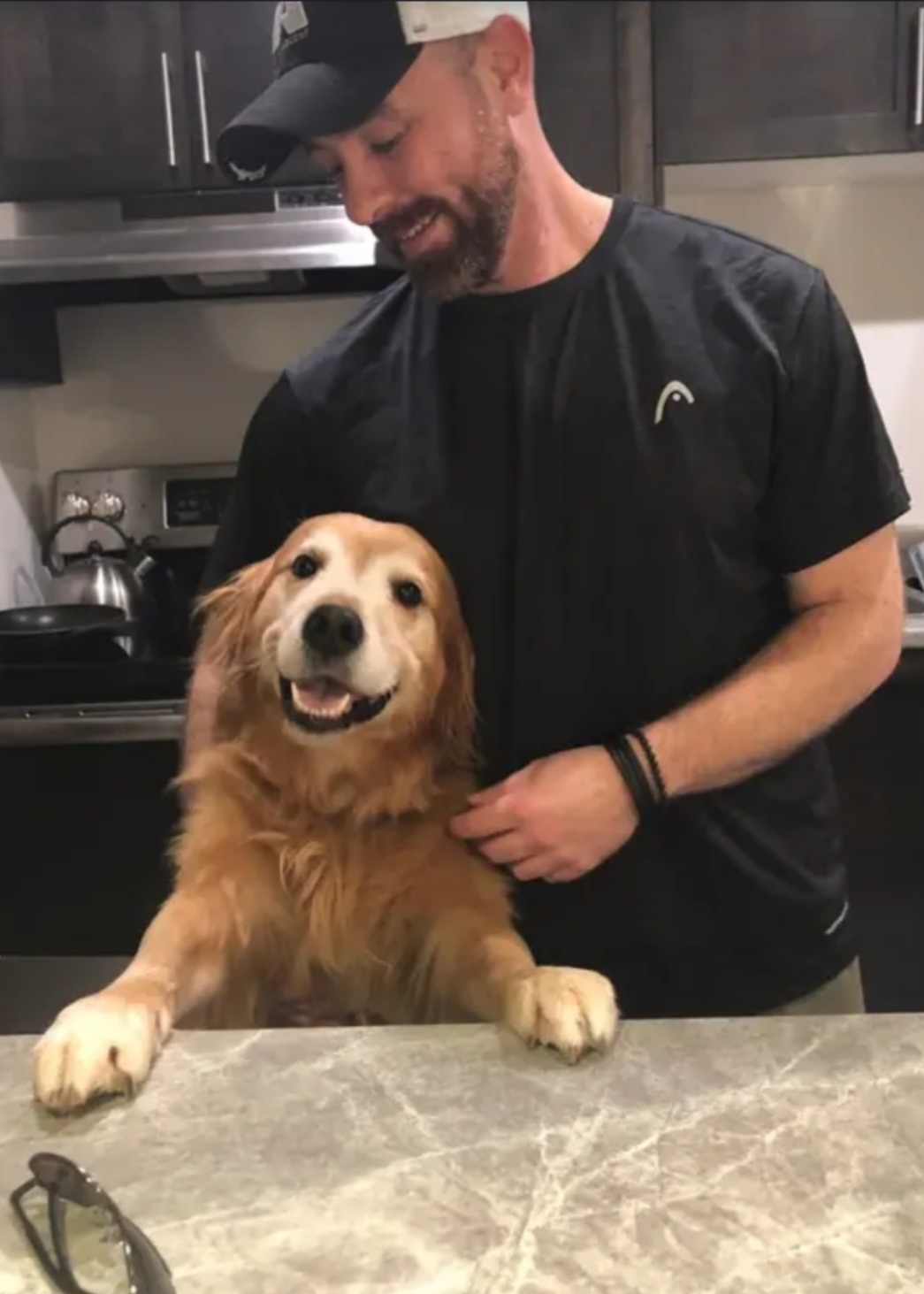
Me and my dog Fynn, who we lost a couple of months ago. He got me through the hardest of it.
Why we exist
I'll never forget the night I sat staring at a public post asking for help just to get through the week. Twelve years spent building a business, a father of three — and there I was, hovering over the button, sick with embarrassment, because I didn't know how else we'd eat.
In late 2024 I'd had to close that business as AI changed my industry almost overnight. For the first time in my life I learned what it is to go without — food insecurity, food banks, couch-surfing, leaning on the kindness of friends and family.
But the deepest problem was never money. It was isolation. Somewhere along the way we stopped knocking on each other's doors and started trying to survive alone — more 'connected' than ever through our screens, and lonelier than ever in real life. The people who actually carried me through weren't institutions, or apps, or algorithms. They were ordinary people. Neighbours who chose to show up.
I'm 43. I grew up in a Canada that — before the feeds and the screens — was known around the world for being kind. Neighbours knew each other. You helped, and you were helped, and nobody kept score. That's the country I remember from the '90s and early 2000s, and the one I was proud to grow up in. I worry my kids won't get to know that Canada — that pride, that built-in sense that people have your back — unless we choose to rebuild it.
That's when it hit me: community is the safety net — and most of us only go looking for it once we're already falling. What if it were there before? What if every neighbourhood had a trusted circle of people who had each other's backs — built in the good times, ready for the hard ones? The pandemic proved life can change overnight. A layoff, a fire, an illness — none of it warns you first.
FavourBee is my attempt to build exactly that, and to point technology back at what actually matters: real neighbours, real relationships, real help — given freely and remembered, so that when your turn comes, the community is there for you the way it was there for me. Help the people who need it. Reward the people who show up. And give everyone the one kind of insurance money can't buy: standing in a community that has your back.
Most of all, this is for my three kids — Mae, Max, and Cole. I'm not chasing more than I had — I was lucky: I grew up in a Canada where neighbours looked out for each other. I want to give them that same Canada, and leave it stronger than I found it, so it's still there for their kids and the generations after. I want them growing up knowing there are good people everywhere — and maybe, one day, to be proud that in his hardest year their dad chose to build something that helps people.
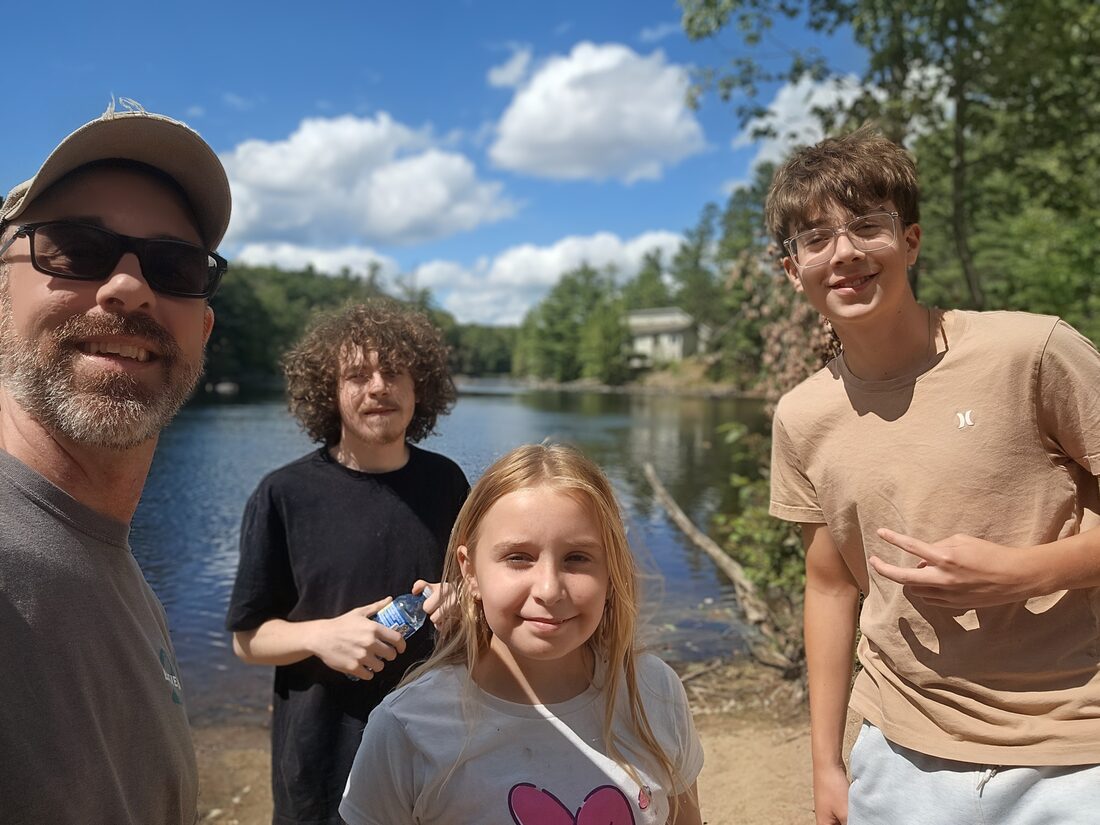
Mae, Max, and Cole — the reason for all of it.
— Kyle Clouthier, founder of FavourBee
This isn't just my story
For a long time I thought my struggle was mine alone. It isn't. Right now millions of Canadians are being squeezed — financially and socially — and most are trying to get through it on their own. The cost of food and shelter has jumped roughly 30% since 2021, far faster than paycheques.
- ~2.2 million food-bank visits in a single month in 2025 — the most ever recorded, about double six years earlier (Food Banks Canada, HungerCount 2025).
- 1 in 4 people in Canada now experience food insecurity (Food Banks Canada, 2026 Poverty Report Cards).
- 42% of Canadians spend more than a third of their income on housing (Food Banks Canada, 2026 Poverty Report Cards).
- ~6 in 10 Canadians feel disconnected from their community, and about half feel lonely every week (YMCA Canada; Canadian Social Connection Survey).
When I needed help most, it wasn't a program or a corporation that changed things — it was ordinary people. So FavourBee isn't another app built to keep you on your phone — it's built to get you off it, back to your neighbours: technology pointed at the one thing we've let it erode — real community, where people show up for each other again.
What we believe
Help is a gift, never a transaction — no money ever changes hands. Trust is earned, not bought — real neighbours vouch for real neighbours. Give now, covered later — your kindness is your insurance, so the generous never burn out. Built for everyone — simple enough for a grandparent or a newcomer. Technology for connection, not division — online that leads to real-world relationships. Grassroots first — powered by neighbours and the local charities and organisations who already serve them.